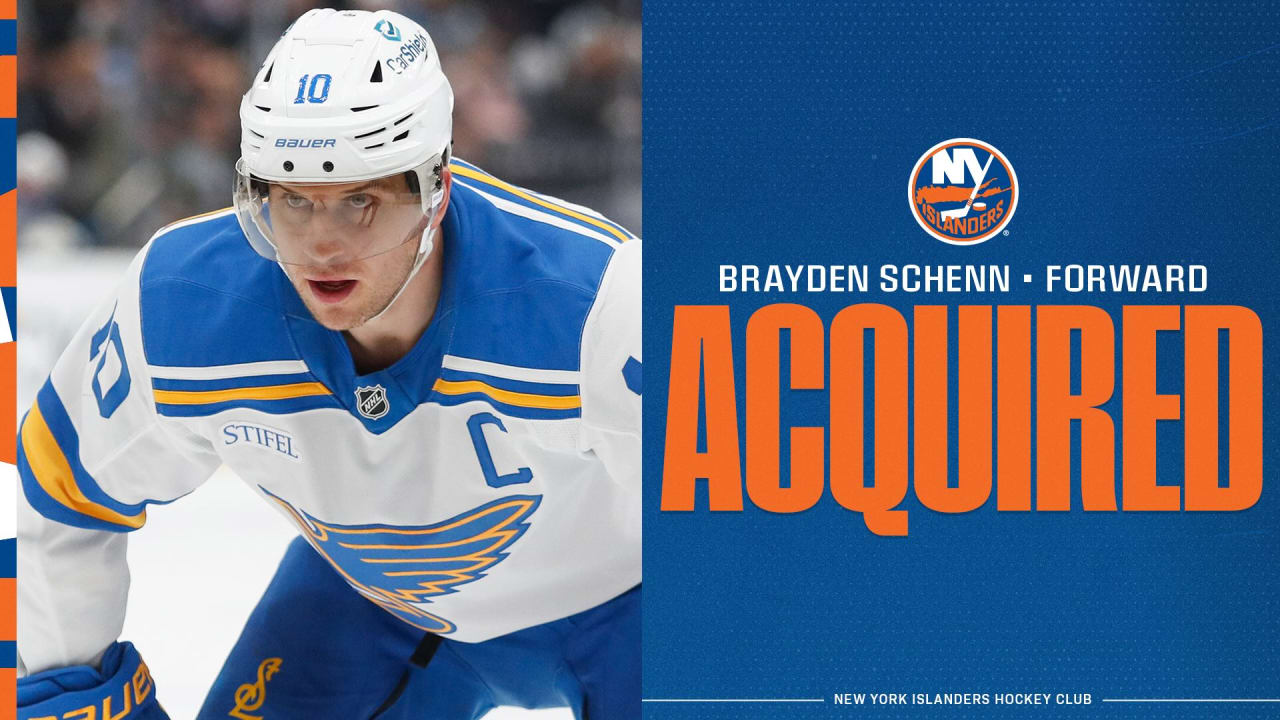
Brayden Schenn Trade: Who Really Won the Blockbuster?
On June 23, 2017, during a bustling NHL Entry Draft in Chicago, a trade unfolded that would reverberate through the league for years to come. The Philadelphia Flyers sent forward Brayden Schenn to the St. Louis Blues in exchange for veteran forward Jori Lehtera, a 2017 first-round draft pick (which became Morgan Frost), and a conditional first-round pick in 2018 (which did not materialize). At the time, Schenn was a productive top-six forward coming off a career-high 59-point season. Both teams had clear objectives: the Blues were looking to bolster their roster for an immediate playoff push, while the Flyers aimed to inject youth and future assets into their system.
Seven years later, the dust has settled, and the full ramifications of the
Brayden Schenn trade are evident. This wasn't just a simple player-for-picks swap; it was a move that profoundly shaped the trajectories of both franchises. So, looking back with the clarity of hindsight, who truly emerged victorious from this pivotal transaction?
The Immediate Aftermath: Initial Reactions and Expectations
When the trade was first announced, reactions were mixed, largely dependent on one's perspective of each team's goals. The St. Louis Blues, under General Manager Doug Armstrong, were aggressively pursuing a championship window. Acquiring Brayden Schenn, a versatile forward capable of playing center or wing, with strong offensive instincts and a physical edge, signaled a "win now" mentality. Schenn was perceived as an immediate upgrade, adding scoring punch and depth to their top two lines. The thought was simple: give up a decent prospect (though Lehtera's contract was a burden) and a first-rounder for an established, impactful player.
For the Philadelphia Flyers and GM Ron Hextall, the move was consistent with their patient "rebuild on the fly" strategy. Accumulating draft capital and prospects was paramount. Trading Schenn, a good player but perhaps not a foundational one, for a first-round pick (which they hoped would yield a future star in Morgan Frost) aligned with their long-term vision. Lehtera was viewed as a salary dump, essentially a cap burden to acquire the pick, with little expectation of on-ice contribution. Flyers fans understood the strategy but might have questioned trading a known commodity for future potential. To get a detailed breakdown of the initial terms and context, you can read more in
Revisiting the Brayden Schenn Trade: Key Details.
Brayden Schenn's Impact in St. Louis: A Cornerstone Acquisition
From the moment he donned the Blue Note, Brayden Schenn proved to be an absolute revelation for the St. Louis Blues. His tenure has been nothing short of spectacular, exceeding even the most optimistic expectations.
*
Instant Offense: In his very first season (2017-18) with the Blues, Schenn exploded for a career-high 70 points (22 goals, 48 assists), immediately justifying the acquisition cost. He brought a consistent scoring touch and playmaking ability that complemented the Blues' existing core.
*
Versatility and Leadership: Schenn seamlessly transitioned between center and wing, providing invaluable flexibility to the coaching staff. His physical game, willingness to go to the net, and strong two-way play quickly made him a fan favorite and a respected leader in the locker room.
*
Stanley Cup Champion: The pinnacle of his impact came in the 2018-19 season. Schenn was a vital cog in the Blues' historic run to their first-ever Stanley Cup. He contributed 17 goals and 37 assists in the regular season and added 5 goals and 7 assists in 26 playoff games, often playing critical minutes in clutch situations. His unwavering effort and clutch performances were integral to the team's ultimate success.
*
Long-Term Commitment: Recognizing his importance, the Blues signed Schenn to an eight-year, $52 million contract extension in 2019, cementing his status as a cornerstone of the franchise. He has continued to be a consistent point producer and a physical presence, demonstrating exceptional durability and commitment to the team.
Brayden Schenn's arrival undeniably elevated the St. Louis Blues. He wasn't just a good player; he was the right player at the right time, filling critical needs and ultimately playing a massive role in delivering a championship.
Philadelphia's Return: A Mixed Bag of Prospects and Pitfalls
On the other side of the ledger, the Philadelphia Flyers' return for Schenn has yielded far more ambiguous results, characterized by one clear misstep and one ongoing development project.
*
Jori Lehtera: The Disappointment: The veteran forward Jori Lehtera was included in the deal primarily for salary matching, and his tenure in Philadelphia proved to be exactly what was feared. In 66 games across parts of two seasons with the Flyers, he managed a paltry 3 goals and 8 assists for 11 points. His performance was consistently underwhelming, and he struggled to find a regular spot in the lineup. The Flyers eventually bought out the final year of his contract in June 2019, essentially wiping him from their books and conceding that portion of the trade as a complete loss. This move underscores the risk of taking on undesirable contracts, even with the lure of a high draft pick.
*
Morgan Frost: The Developing Prospect: The true prize for the Flyers was the 2017 first-round pick, which they used to select Morgan Frost 27th overall. Frost was a highly skilled center with excellent vision and offensive creativity. However, his journey to becoming a full-time NHL impact player has been a gradual one.
*
Development Path: After strong junior seasons, Frost spent significant time developing in the AHL with the Lehigh Valley Phantoms. Injuries also hampered his progress at times.
*
NHL Struggles and Flashes: Since making his NHL debut in 2019, Frost has shown flashes of his high-end skill, particularly his playmaking ability. However, he has struggled with consistency, particularly in goal-scoring and the physical demands of the professional game. He has yet to fully establish himself as a consistent top-six forward or the impact player the Flyers hoped he would become when they drafted him. He's still a relatively young player with potential, but his output has not yet reached the level of a player who commanded a first-round pick, let alone a player of Schenn's caliber.
The Flyers’ side of the trade highlights the inherent risk in valuing future assets over proven talent. While Frost still has time to grow, the return has been far less immediate and impactful than what the Blues received.
Evaluating Trade Success: Beyond the Box Score
Determining the "winner" of a trade isn't always as simple as comparing point totals or draft positions. It requires looking at the broader context of team objectives, long-term strategy, and the ultimate impact on the franchise.
1.
Alignment with Team Goals: The Blues unequivocally won in this regard. Their goal was to acquire a player who could immediately contribute to a championship-contending team, and Schenn delivered beyond measure, culminating in a Stanley Cup. The Flyers’ goal was to acquire future assets. While Frost remains a potential piece, the tangible, immediate success for the Blues overshadows the Flyers' slower, less certain return.
2.
Return on Investment: For the Blues, Schenn provided exceptional value for the assets they parted with, directly contributing to the franchise's greatest achievement. For the Flyers, Lehtera was a negative asset, and Frost, while promising, has yet to provide equivalent value to what Schenn offered both in production and in fulfilling team objectives.
3.
Opportunity Cost: This is a crucial, often overlooked factor. The Flyers gave up a productive NHL player. While they gained a first-round pick, they lost Schenn's immediate production and leadership. Could that production have helped them bridge a gap earlier? This is a speculative question, but one worth considering. The Blues, conversely, sacrificed a prospect and a pick, but the *return* on that sacrifice was immense.
The
Brayden Schenn trade illustrates perfectly how success can be measured not just by individual player statistics, but by how a move impacts a team's overall trajectory and ultimate goals. For more insights on how such trades ripple through an organization, read
Brayden Schenn Trade: Full Impact on Blues & Flyers.
Conclusion: A Clear Winner Emerges
When analyzing the
Brayden Schenn trade through the lens of hindsight and comprehensive impact, there is a clear winner: the St. Louis Blues. They acquired a consistent, versatile, and ultimately championship-winning forward in Brayden Schenn who became a core piece of their franchise. His direct contributions to their 2019 Stanley Cup victory, coupled with his sustained high-level performance and long-term commitment, represent an extraordinary return on investment.
The Philadelphia Flyers, while pursuing a valid long-term strategy of accumulating assets, saw one component of their return (Jori Lehtera) fail spectacularly, and the other (Morgan Frost) still striving to reach his full potential. While Frost may still evolve into a valuable NHL player, the immediate and profound impact Schenn had on the Blues makes this a lopsided victory for St. Louis. This trade serves as a classic example of how acquiring the right player at the right time for a clear organizational objective can pay dividends far beyond initial projections, forever altering the course of a franchise.